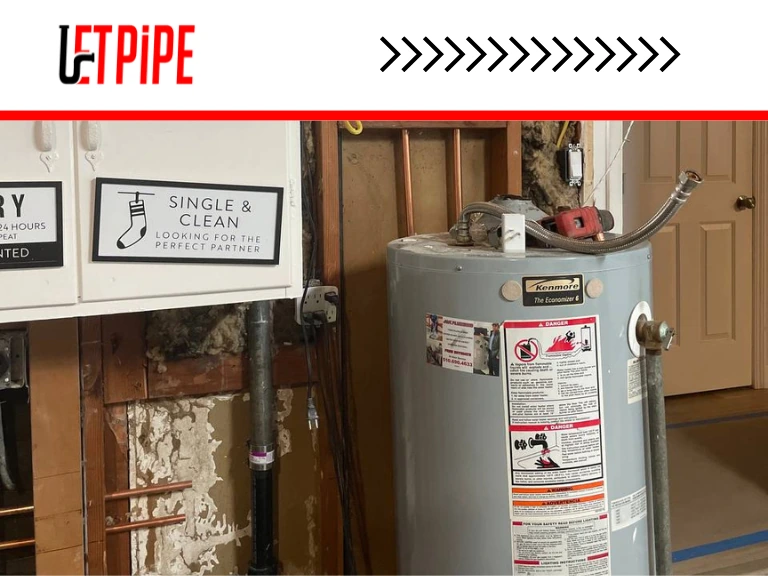
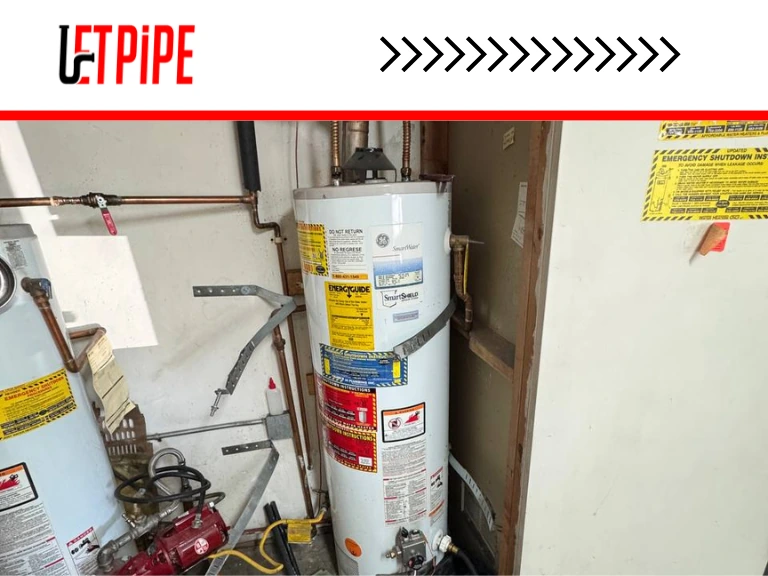
When a water heater stops producing hot water, most homeowners assume it is broken and start shopping for a replacement. Sometimes that is the right call. But a significant number of those calls turn out to be something more basic: the water heater was never the right size for the household in the first place.
Replacing a 40-gallon tank with another 40-gallon tank solves nothing if the house needs 55 gallons. The new unit arrives, runs fine, and three months later, the family is back to cold showers on Tuesday mornings.
Before you replace your water heater, spend fifteen minutes on the question of size. This article explains how to do that calculation, what metrics actually matter on the spec sheet, and what changes when you switch from a gas tank to a heat pump unit.
Why Tank Gallons Is the Wrong Number to Start With
Walk into any hardware store, and the water heaters are organized by gallon capacity: 30, 40, 50, 75, 80. Homeowners naturally gravitate to that number. It feels like the obvious measure of whether a unit is big enough.
It is not the right number.
Total tank gallons tells you how much water the heater holds when full. It does not tell you how much hot water the unit can actually deliver during a busy hour, which is the only scenario that matters when your household is showering, running the dishwasher, and starting a load of laundry at roughly the same time.
The number you need is called the First Hour Rating, abbreviated FHR. Every water heater sold in the United States is required to display this figure on the yellow EnergyGuide label. It appears in the upper left corner labeled “Capacity” (first hour rating). It measures the total gallons of hot water the unit can supply in one continuous hour, starting from a full tank at setpoint temperature.
FHR accounts for two things together: the volume of hot water already stored in the tank and the rate at which the burner or heating element can reheat incoming cold water during that same hour. A gas water heater with a strong burner can have an FHR significantly higher than its tank volume, because it reheats quickly. An electric water heater with slower elements may have an FHR close to or even below its tank volume, because cold water dilutes the stored hot water faster than the element can compensate.
The practical upshot: a 40-gallon gas tank can outperform a 50-gallon electric tank in terms of hot water delivered per hour. Comparing gallons between different fuel types without looking at FHR is misleading.
The house will look disrupted at the end of Day 1. There will be open access holes in walls, removed cabinet kickplates, and exposed pipe runs in utility areas. This is normal and expected. Nothing is patched yet – patching happens after inspection, which has not occurred yet.

How to Calculate What Your Household Actually Needs
The Department of Energy provides a straightforward method. Identify the one-hour period in your day when hot water use is highest, tally up every activity that happens during that window, and add the gallons.
For most Bay Area households, that peak hour is the morning. For others it is the evening. Use whichever applies to your home.
Here are the standard hot water volumes per activity:
| Activity | Hot water used | Notes |
| Shower (standard flow) | 10 gallons | 8-minute average |
| Shower (high-flow head) | 15 to 20 gallons | Rain showers, soaking heads |
| Bath (full tub) | 30 to 40 gallons | Largest single draw |
| Dishwasher cycle | 3 to 6 gallons | Varies by model and age |
| Washing machine (top load) | 25 to 40 gallons | Front-load uses less |
| Hand-washing dishes | 2 to 4 gallons | Per sink session |
| Shaving / sink use | 1 to 2 gallons | Per person |
Add up the activities that happen simultaneously or back-to-back within your peak hour. The result is your peak-hour demand. Your replacement water heater should have an FHR at or above that number.
Example: a household of four with two people showering back-to-back (20 gallons), the dishwasher running (4 gallons), and one person washing hands twice (4 gallons) has a peak hour demand of around 28 gallons. A 40-gallon gas water heater with a typical FHR of 55 to 65 gallons covers that comfortably. A 50-gallon electric water heater with an FHR of 48 gallons might not.
This is why some households with seemingly large tanks still run cold: they are looking at the wrong number.
Quick Reference: Recommended Tank Sizes by Household
If you do not want to calculate demand from scratch, the ranges below reflect guidance from the Department of Energy and major manufacturers. These assume standard usage patterns. High-demand households with multiple showers running at once or large soaking tubs should size toward the upper end or calculate directly from peak-hour demand.
| Household | Gas tank (gallons) | Electric tank (gallons) | Heat pump (gallons) |
| 1 to 2 people | 30 to 40 | 30 to 40 | 40 to 50 |
| 2 to 3 people | 40 to 50 | 40 to 50 | 50 to 65 |
| 3 to 4 people | 40 to 50 | 50 to 60 | 65 to 80 |
| 5 or more | 50 to 75 | 80 | 80 |
Notice that electric tanks are sized larger than gas tanks for the same household. That is because electric elements heat water more slowly, meaning the effective output per hour is lower. The tank needs to be bigger to store more pre-heated water as a buffer.
Can’t figure out the right water heater size?
We’ll guide you and find the best fit.
The Heat Pump Exception: Why Sizing Up Is Required
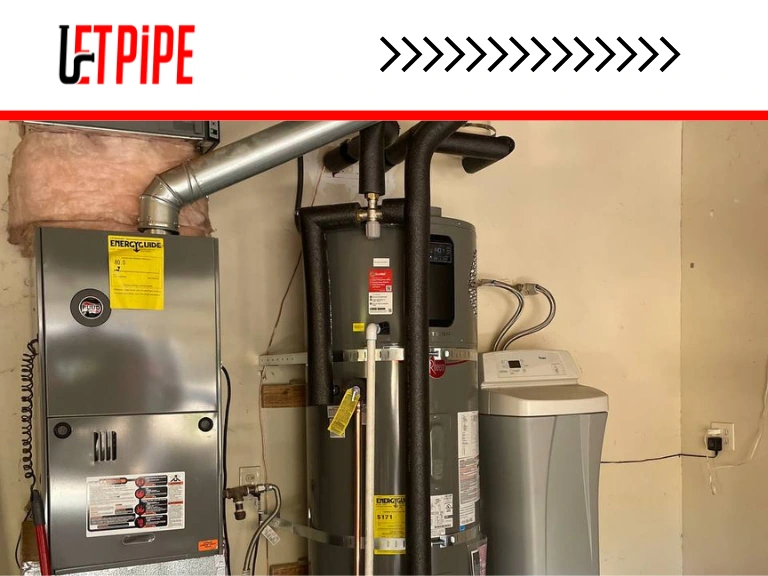
Heat pump water heaters have become increasingly common in Bay Area homes. They are eligible for significant rebates, and their operating efficiency is substantially better than conventional electric resistance units.
They also have a recovery rate that is meaningfully slower than a gas tank of the same volume, and this creates a specific sizing problem that catches homeowners off guard.
In pure heat pump mode, a typical unit recovers at roughly 8 to 12 gallons per hour. A gas water heater with a 40,000 BTU burner recovers 40 gallons per hour or more. That is a significant difference. If a household switches from a 50-gallon gas water heater to a 50-gallon heat pump unit of the same gallon rating and uses the same morning routine, they will likely notice cold water breaking through sooner than they did with gas.
The standard industry guidance is to go one size up when switching from gas to a heat pump. A household that was well-served by a 40 to 50-gallon gas tank should look at a 65-gallon heat pump unit. A household stepping up from a 50 to 65-gallon gas tank should consider an 80-gallon heat pump.
Most heat pump units also have a hybrid or high-demand mode that activates electric resistance heating alongside the heat pump when demand spikes. This closes the recovery gap substantially, at the cost of reduced efficiency during those periods. It is worth understanding which modes your specific unit supports and how to configure them before installation.
Other Reasons Your Water Heater Might Feel Too Small
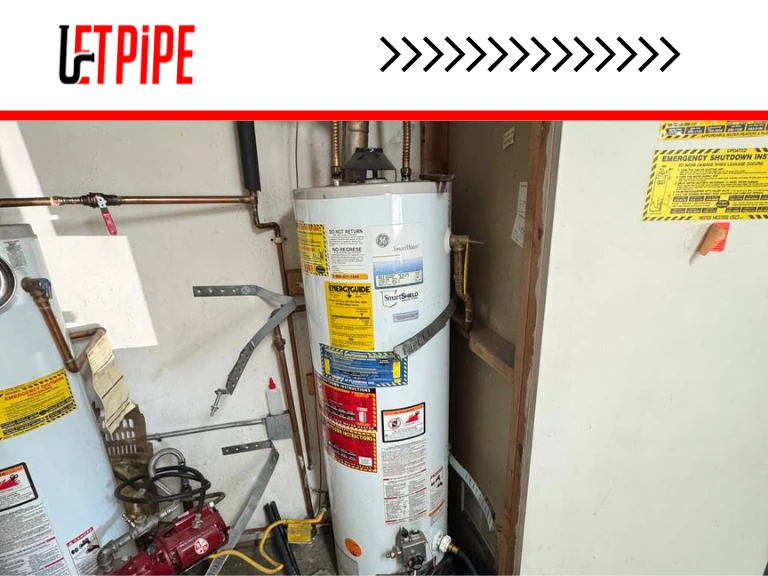
Before concluding that the tank is undersized, it is worth ruling out a few other causes of inadequate hot water output. These are common in Bay Area homes and are sometimes misdiagnosed as size problems.
Sediment buildup
Bay Area water runs 7 to 19 grains per gallon of hardness depending on the source and season. Over time, calcium and magnesium deposits settle at the bottom of the tank, insulating the water from the burner. A tank with significant sediment takes longer to heat, has reduced effective capacity, and makes a rumbling or popping sound during heating cycles. This can make a correctly sized unit behave like one that is too small. An annual flush removes sediment and restores recovery performance.
A failing dip tube
The dip tube is a plastic pipe inside the tank that directs incoming cold water to the bottom, where heating occurs first. If the dip tube cracks or breaks, cold water mixes with hot water near the top of the tank, and the outlet delivers lukewarm water much sooner than it should. This is a repair, not a replacement situation, and it is occasionally misread as an undersized unit.
Thermostat set too low
Water heaters should be set to 120 degrees Fahrenheit as a minimum for household use. A thermostat that has drifted below that setting, or was set low intentionally at some point, reduces the effective temperature differential and shortens the usable hot water supply. Confirm the setpoint before attributing cold water to capacity.
Household changes
If the household has grown since the water heater was installed, the unit may be correctly sized for the original occupancy and simply underpowered for current demand. Adult children moving back, a new addition to the family, or a home office situation that changes the morning schedule can all shift peak hour demand past what the original installation was built for.
Before You Buy: Questions to Ask Your Plumber
When you call JetPipe or any other licensed plumber about a water heater replacement, these are the questions worth having ready:
- What is the FHR of the unit being recommended, and how does it compare to my calculated peak hour demand?
- If I switch from gas to a heat pump, what tank size do you recommend given my household’s morning routine?
- Is there any sign of sediment buildup or a dip tube failure in my current unit that might explain the cold water before I invest in a replacement?
- What rebates am I eligible for given my utility provider and the unit being installed?
- What is the physical clearance requirement for a heat pump unit, and will my current installation location accommodate it?
That last question matters more than it sounds. Heat pump water heaters are physically taller than conventional tanks due to the compressor and fan assembly on top. They also require a minimum of 700 to 1,000 cubic feet of air space around them to operate in heat pump mode efficiently. A closet installation that worked for a gas tank may not work for a heat pump unit without modification.